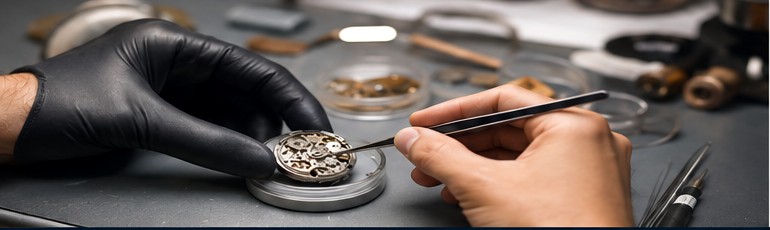
Diagnostic Inspection & Watch Repair
Purpose: identify faults and define a practical repair path. Typical tasks: visual inspection, function checks, movement review, diagnosis of winding, setting or timing issues, and preparation of a service recommendation.
Format: individual watch assessment. Duration: depends on watch type, parts availability and condition.
Vintage Watch Restoration & Conservation
Purpose: improve function and condition while respecting authenticity. Typical tasks: case and crystal assessment, movement service planning, controlled cleaning, review of hands/dial condition and documentation of visible changes.
Format: project-based. Duration: defined after inspection.

Case, Crystal & Bracelet Care
Purpose: improve everyday usability and presentation. Typical tasks: cleaning, bracelet inspection, clasp review, crystal replacement assessment and conservative refinishing recommendations where appropriate.
Format: individual service. Duration: based on condition and required parts.
Mechanical Movement Servicing
Goals: support stable function and reduce avoidable wear. Practical work: inspection, disassembly where appropriate, cleaning, lubrication, reassembly, regulation and function verification. Final work depends on movement design and condition.
Collection Documentation & Cataloguing
Goals: help collectors organize factual information about their watches. Practical tasks: model/reference recording, condition notes, service-history organization, photography checklist and basic collection structure. This is not a financial valuation service.
Horological History Consultation
Goals: provide educational context about watchmaking periods, technical developments, design movements and collecting terminology. Format: one-to-one educational session or written summary based on available information. Historical attribution may remain uncertain if documentation is incomplete.
Collector Care Workshop
Goals: teach safe everyday care and informed ownership. Practical exercises: handling, storage, winding routines, moisture awareness, strap/bracelet inspection and service-record organization. Format: educational session. Typical duration: 90–120 minutes.
Introduction to Watch Movements
Goals: build a practical understanding of mechanical and quartz watch architecture. Practical exercises: identifying major movement components, understanding power flow and learning maintenance terminology. Format: educational course. Typical duration: 2–3 hours.
Watch Collecting & Provenance Basics
Goals: help enthusiasts understand documentation, originality, reference research and condition records. Practical exercises: reading reference numbers, comparing documentation and building a collection file. No purchase or investment recommendations are provided.